






Introduction — Settling in Zurich: opportunities and formalities
Settling in Zurich, Switzerland’s largest city, brings plenty of professional, cultural and lifestyle opportunities. As a European financial hub and innovation centre, Zurich attracts tens of thousands of expats each year. But before you can enjoy the lakefront, stroll through the Old Town (Altstadt) or sip coffee in trendy Kreis 4 cafés, you’ll need to navigate a set of strict administrative requirements: residence permits, municipal registration, insurance and tax procedures. These formalities may seem demanding, but they are clear and well-organised, giving you access to high-quality public services. Good preparation helps you avoid delays, fines and unnecessary checks.
This practical guide, written for French-speaking newcomers planning to move to Zurich, breaks down the main steps: permit categories (L, B, C), registration with the city Einwohnerkontrolle, procedures at the Migrationsamt (cantonal migration office), health insurance obligations and tax formalities. You’ll find exact addresses, typical opening hours, indicative costs in euros (converted from Swiss francs), and down-to-earth local tips — from choosing a neighbourhood to handling rental contracts and translating documents.
Switzerland is not an EU member, but it has agreements that ease mobility for EU citizens. Still, Zurich’s administration maintains a high level of documentation requirements: proof of income, employment contract, proof of accommodation, valid identity documents, and sometimes proof of health insurance. Processing times can vary: initial registration is usually required within 14 days of arrival, while permit issuance can take a few weeks to several months depending on the permit type. Knowing which offices to contact and how their procedures work will speed up your integration.
This guide is organised to be practical: themed sections with concrete examples of addresses, opening hours and costs. To make it easier to follow, descriptions of physical locations and field tips are included so you can find your way during appointments. Whether you’re a young professional relocated by a company, a freelancer, a student or moving with family, the information below will help you complete administrative steps with confidence.

Residence permits in Zurich: categories, procedures and costs
Understanding your residence status is the first step when moving to Zurich. The most common permits are L (short-term), B (longer-term) and C (permanent). The L permit is typically issued for work contracts under one year or other temporary stays; the B permit covers longer-term employment and is usually granted for one year (renewable) or up to five years depending on agreements; the C permit is permanent residency after several years of lawful residence. EU citizens benefit from simplified rules, but registration is still mandatory.
Where to apply? The Migrationsamt (Cantonal Migration Office) of the canton of Zurich handles permit applications. Address: Migrationsamt des Kantons Zürich, Stampfenbachstrasse 115, 8006 Zürich. Indicative opening hours: Monday–Friday 08:00–12:00 and 13:30–17:00. It’s advisable to book an appointment via the cantonal website to avoid long queues. Required documents typically include a valid passport, employment contract or proof of means, proof of accommodation (rental agreement), health insurance and passport-style photos that meet the requirements.
Administrative fees vary by permit type. Indicative fees in euros: application fee for a B permit ≈ 150–200 EUR (about 160–215 CHF), L permit ≈ 100–150 EUR, C permit ≈ 400–450 EUR (higher conversion). These amounts are indicative and may be charged in Swiss francs; be prepared to convert or pay by card. Processing typically takes 2 to 8 weeks depending on file complexity and the applicant’s nationality. In some cases the authorities may request additional documents (e.g. translated diplomas, bank statements).
Municipal registration: the Einwohnerkontrolle and local obligations
After arriving in Zurich, you must register with the municipality within a short deadline (often 14 days). In the city of Zurich the responsible body is the Einwohnerkontrolle (residents’ registration office). Main address: Einwohnerkontrolle Stadt Zürich, Stadthausquai 17, 8001 Zürich. Typical opening hours: Monday 08:00–17:00, Tuesday–Thursday 08:00–16:00, Friday 08:00–15:00. Check the latest opening times online before you go.
The registration procedure involves completing a declaration form and presenting your passport, rental agreement or a landlord-signed housing confirmation, plus employer confirmation or proof of funds. The Einwohnerkontrolle records your details in the municipal register and issues a registration certificate (Anmeldebestätigung), which you will often need to open a bank account, sign up for utilities or enrol children in school. If you move within the city, you must notify the same office of your change of address.
Registration fees: most Swiss municipalities charge a nominal fee. In Zurich expect roughly 30–60 EUR (35–65 CHF) for registration or certificate issuance. Additional services (certified copies, official translations) are usually charged separately. Practical tip: always have both paper and digital copies of your rental contract and identity documents; offices often ask for several copies.
Insurance, taxes and other administrative obligations in Zurich
Once registered, a number of obligations kick in. Health insurance is mandatory in Switzerland for anyone residing longer than three months. You have three months from arrival to subscribe to a basic health insurance plan (Grundversicherung). Examples of insurers active in Zurich: CSS Versicherung AG, Gewerbestrasse 10, 8021 Zürich and Helsana Versicherungen AG, Sihlstrasse 3, 8620 Wetzikon (Wetzikon is on the outskirts but operates branches). Typical hours: Monday–Friday 08:30–17:00. Indicative monthly premiums for basic coverage ≈ 250–450 EUR depending on age and deductible chosen (260–470 CHF).
Taxation: income tax in Switzerland is levied at municipal, cantonal and federal levels. Zurich is known for relatively moderate taxation, but rates depend heavily on family situation and income. If you’re an employee, the employer may withhold tax at source (Quellensteuer) for cross-border workers or holders of L/B permits without a C permit. The cantonal tax office is located at Amt für Steuern des Kantons Zürich, Stampfenbachstrasse 71, 8090 Zürich (verify the current address). Opening hours: Monday–Friday 08:30–12:00 and 13:30–16:30. Consider hiring a tax advisor if you have international income, property, or self-employed activity.
Other practical obligations: enrolment in an occupational pension scheme (2nd pillar) through your employer, opening a bank account (e.g. UBS, Bahnhofstrasse 45, 8001 Zürich; standard business hours), and vehicle registration if you import a car. To open a bank account, banks typically require your Einwohnerkontrolle registration certificate, passport and proof of address. Bank fees: basic accounts ≈ 5–12 EUR/month depending on services (5–13 CHF).
Practical tips to smooth the process and integrate
A few practical tips to make your administrative steps in Zurich run smoothly: prepare a complete paper and digital file (passport, employment contract, rental agreement, passport photos that meet requirements, insurance certificates), book appointments online when possible, and arrange sworn translations for any documents not written in German, French, Italian or English. Municipal services operate mainly in German (spoken Swiss German for conversations), but administrative staff often speak English and sometimes French.
Choose your neighbourhood based on your lifestyle: Kreis 1 (Altstadt, the historic centre) for immediate access to institutions and shops; Seefeld (Seestrasse) for an upscale lakefront vibe; Zürich-West (Hardstrasse) for a modern, start-up atmosphere; Oerlikon for fast links to Zurich-Kloten airport. Rents vary widely: expect about 1,500–2,500 EUR/month for a two-room apartment in the city centre (1,580–2,650 CHF), while prices in outer districts can drop to 1,000–1,400 EUR.
Stay informed about regulatory changes: official portals to consult are www.stadt-zuerich.ch for the city and www.zh.ch for the canton. If in doubt, expat assistance services and immigration lawyers are available in Zurich, but their advice costs money: initial consultations ≈ 100–200 EUR. Finally, joining local networks (meetups, sports clubs, language schools) speeds up adaptation and helps you build a practical network for everyday life.
Conclusion — Prepare your move for a smooth integration
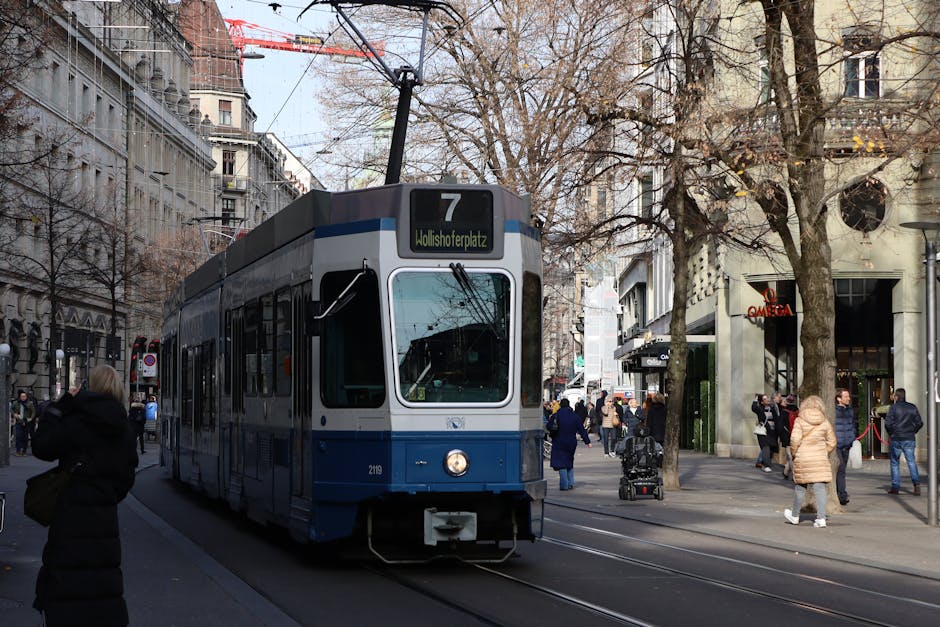
Moving to Zurich means dealing with several authorities and completing key steps: applying for the correct residence permit, registering with the Einwohnerkontrolle, taking out health insurance, handling tax formalities and meeting social obligations. Although the rules may seem strict, they are structured and transparent: with a complete file, early appointments and a clear understanding of costs (presented here in euros as an indication), you can get through these steps without stress. Zurich rewards preparation: excellent healthcare, efficient public transport, safety and a high quality of life.
Always double-check addresses and opening hours on official websites before visiting offices: the useful contacts mentioned (Migrationsamt, Einwohnerkontrolle, Amt für Steuern) are starting points but schedules or appointment procedures may change. For complex situations (family moves, freelance activity, international income), consult a tax advisor or immigration expert to avoid costly mistakes. And remember the local touch: learning some basic German and understanding Swiss customs will make daily interactions easier and help you get the most out of your new life in Zurich.
Enjoy your stay and welcome to Zurich: a city of lakes, nearby mountains and precise administrative timing — where good organisation is the key to fully enjoying a dynamic and welcoming city.